
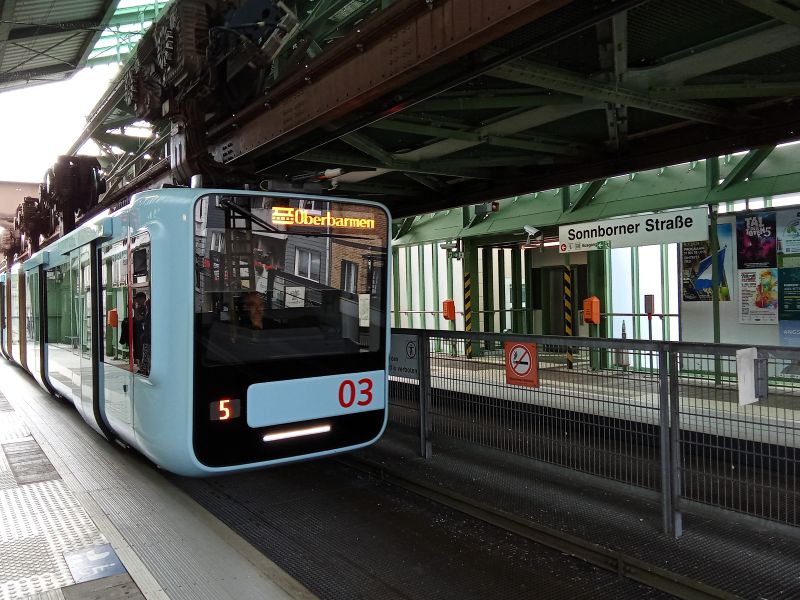
The Wuppertal Suspension Railway (Wuppertaler Schwebebahn) is the oldest of its kind in the world. Since 1901, it has been gliding above the River Wupper for 13.3 kilometres with its passengers. It has 20 stations, and you can buy a day pass to ride it and get a good look at the entire city, which was formed from the settlements in the Wupper Valley after the Schwebebahn connected them.
Wuppertal is a city of 355,000 inhabitants in western Germany, in North Rhine–Westphalia. It was founded in 1929 through the merger of several towns – including Elberfeld and Barmen – and received its current name in 1930. The city lies in the valley of the River Wupper, stretching across steep hillsides, and is among the greenest cities in Germany (two-thirds of its area is covered by green spaces), while also being an important industrial centre. Aspirin was invented here (Bayer, 1897), and Friedrich Engels was born here.
We started our suspension railway ride from the terminus coming from Düsseldorf (Vohwinkel), and floated all the way above the river to the other end (Oberbarmen station), so that on the way we could scout out where it would be worth hopping off on the way back.
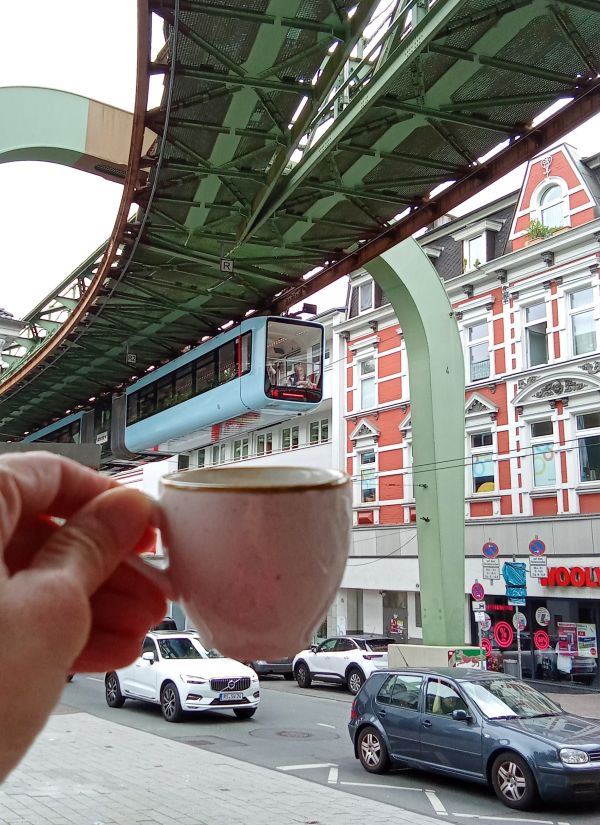
But before setting off, we absolutely had to grab a coffee – the café has a surprisingly good selection. Sipping our drinks out on the terrace, we could watch the hanging cars coming and going from below. We found a similar spot near the Hauptbahnhof as well, but there we watched the people below watching us from above. Bat metro!
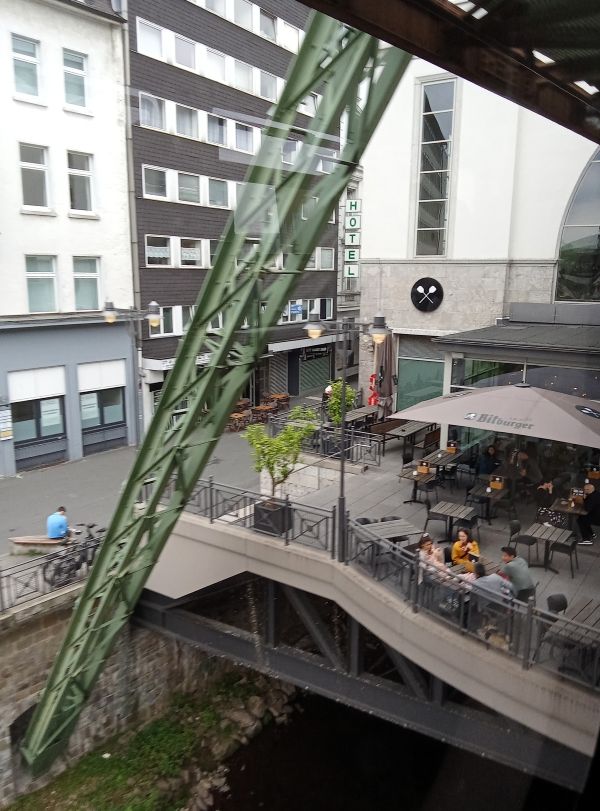
In fact, Hauptbahnhof is the best place to get off if you’re planning to explore the city on foot. From there, it’s just a few minutes’ walk to the Elberfeld city centre and its sights, such as the neo-Gothic Old Town Hall (Rathaus), built between 1895 and 1900, and the Jubilee Fountain (Jubiläumsbrunnen) on Neumarkt, a fountain standing 11.5 metres tall.

You don’t need to plan for hours of walking, since Wuppertal’s main attraction is really the suspension railway itself. We also went looking for this upside-down statue:
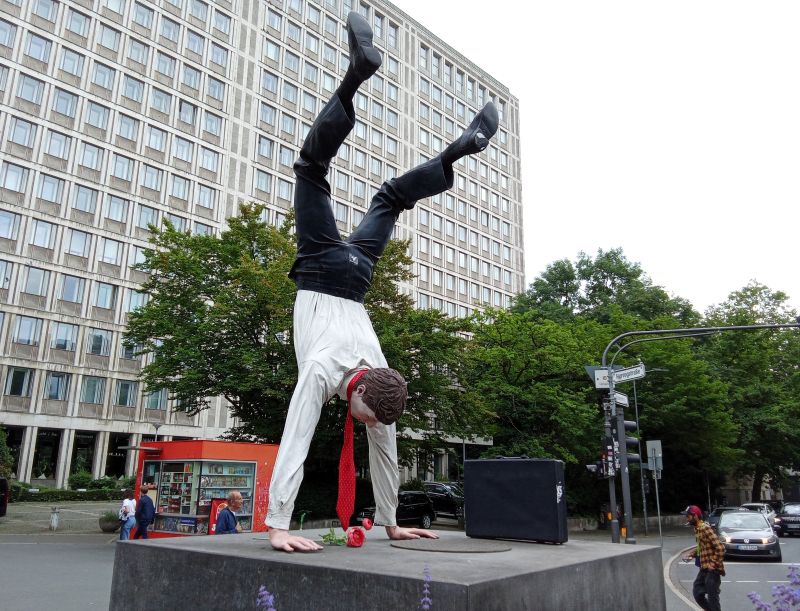
Next to it there’s a great Italian restaurant called Nonna di Mia. A mandatory coffee, then back onto the train at the Ohligsmühle stop.
Barmen, the other city centre (thanks to the valley layout and the merging of settlements, Wuppertal is like a multi-headed snake), can be easily reached from the Alter Markt or Werther Brücke stops. Werther Brücke is especially interesting, because it is the most beautiful station on the suspension railway: it was rebuilt in the spirit of its original Art Nouveau design. About 100 metres from it you’ll find the Schwebodrom, the Schwebebahn museum enhanced with VR experiences.


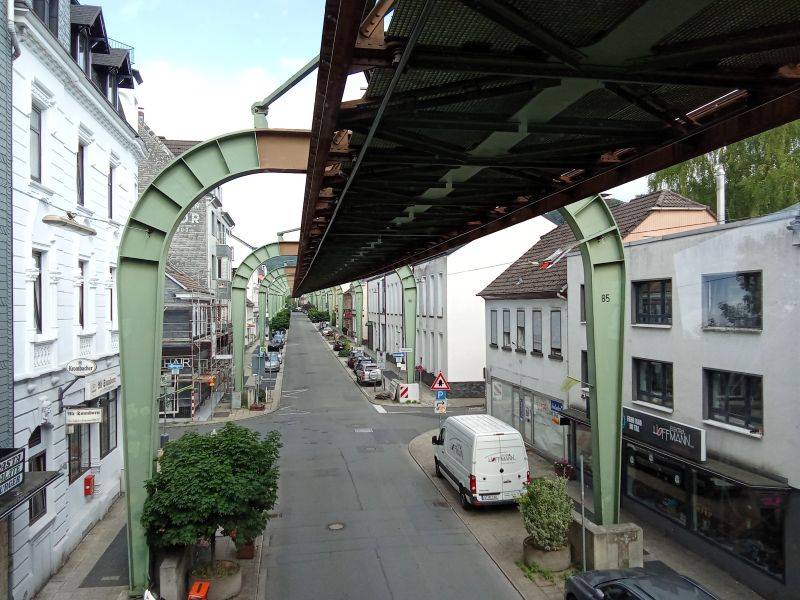

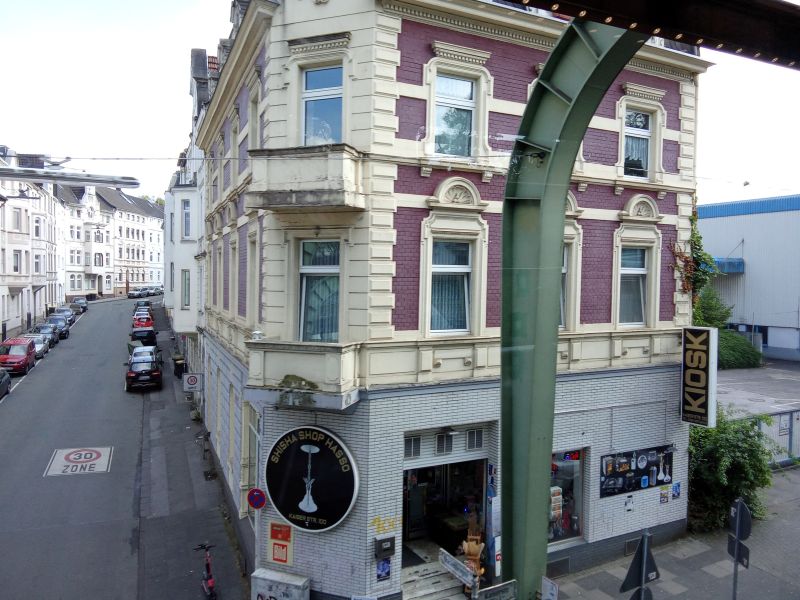

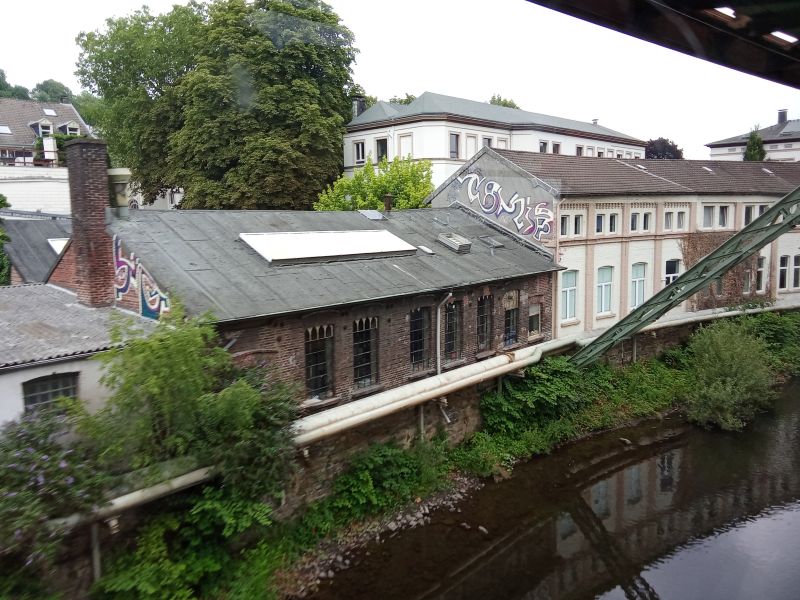
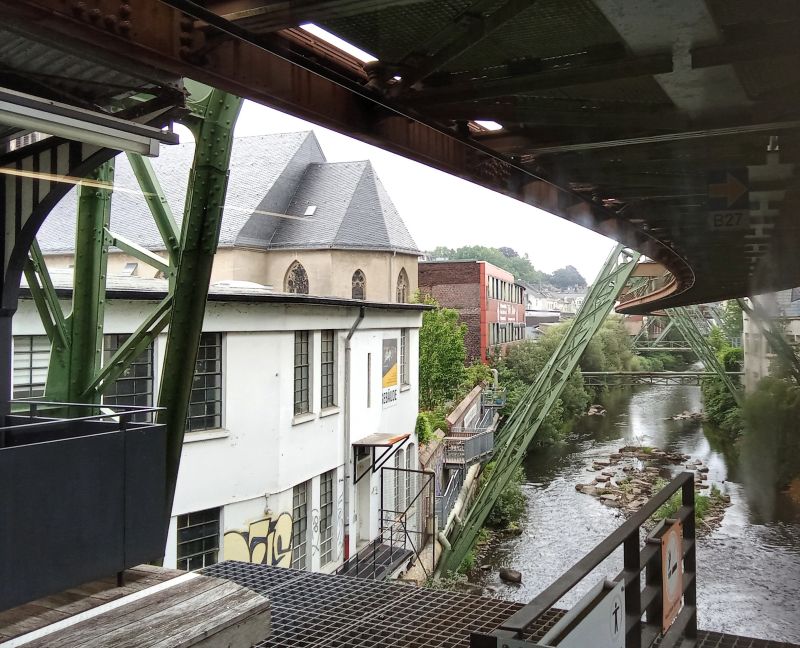
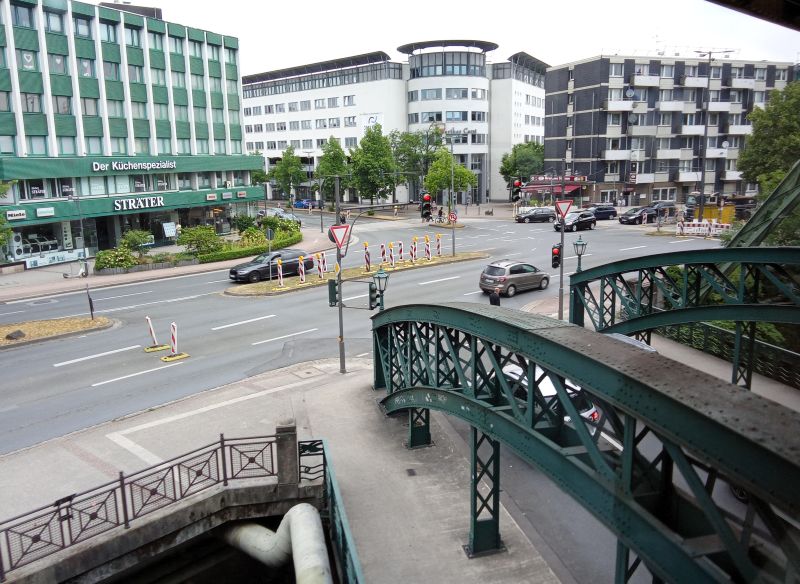
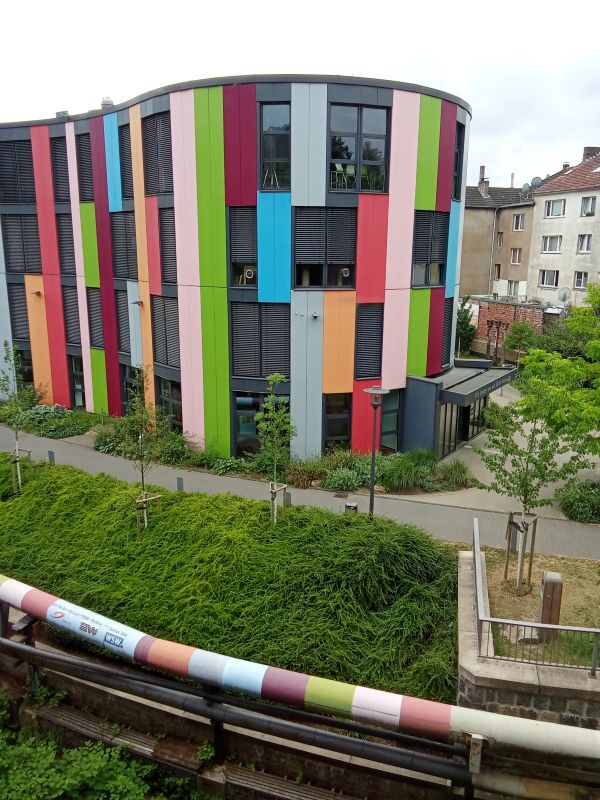


We then hopped off cleverly at the Zoo/Stadion stop, because there happened to be an open-air flea market there, and it’s also the best stop for anyone wanting to visit the zoo.
Speaking of animals: on 21 July 1950, as a publicity stunt, the Althoff Circus put a baby elephant on the Wuppertal suspension railway at the Alter Markt station. The show did not go quite as smoothly as planned, as the elephant was not particularly fond of the idea… It jumped around until it fell out of the carriage and into the river. The animal, two journalists and one passenger suffered minor injuries. After the incident, the elephant was named Tuffi, which means “dive” in Italian. A railway official and the circus director were fined.
There are several types of tickets for the Schwebebahn; a regular single ticket costs €3.6, while a 24-hour pass costs €8.8 (prices as of 2025) for one person. Each additional person costs €4.4, so it’s worth buying it together. There is also a combined ticket that includes a visit to the zoo. More detailed information about the tickets can be found here.
Date of visit: July 2025
 roziutazik.hu